HVAC Plumbing Electrical QuickBooks CleanupHow the contract decides the bill
The contract says whether the price is one sum or whether labor and materials are billed apart. That sentence changes the books.
Go to the form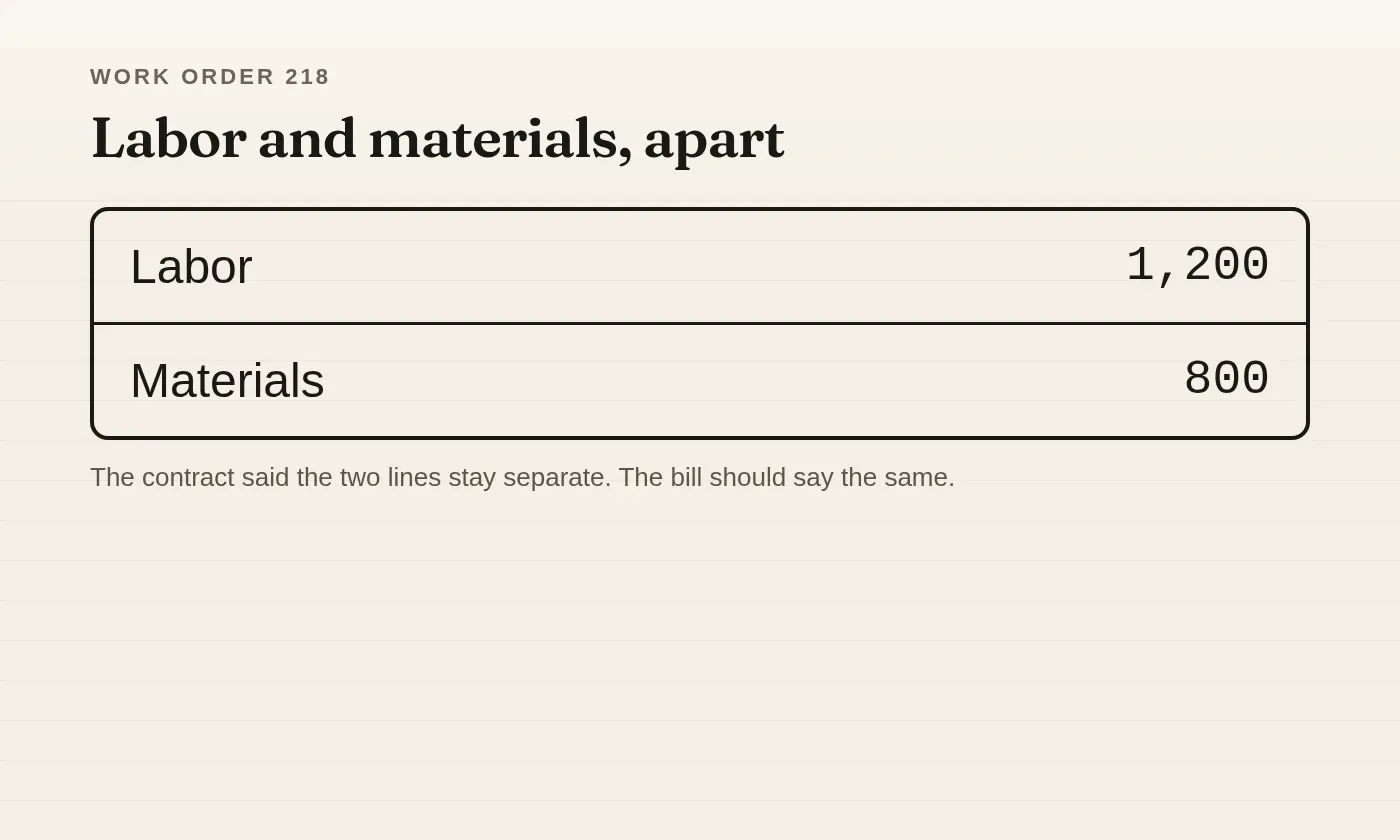
One sum, or labor and materials apart
The contract is the part that changes the books. A progress bill has to say whether the job is one price or whether labor and materials are written on separate lines. If the bill is silent, the next reader will treat it as whatever they fear.
We do not print a state's sales tax answer on this page. Some states tax the materials on a separated contract and treat a single price differently. Some states treat labor on a home differently from labor in a place of business. The answer for this state, with the rates and the labels, is on the state page. What belongs here is the habit of writing the contract type on the invoice before the batch posts.
Send the page of the contract that says which kind it is. Say whether the bills are progress bills, and whether a deposit came in before the work. Deposits stay unearned until an invoice earns them. A deposit waits for an invoice on every street the trucks reach.
A house and a place of business
A hospital, an office, a restaurant, or a shop is not a house. A hotel stay is not a house either. A pricebook with one item for all of those buildings will be wrong on most of them, because the return and the sales tax report both need to know which building it was.
We split the items to match the building. The technician needs names that can be picked on a roof. House repair, business repair, planned visit, new work. Four names. The tax treatment of each name is a state rule, and it is written out on the state page rather than guessed in a national sentence.
The worry we hear most is a letter that treats every invoice as the same kind of work. The relief is a file where each invoice names its kind. Once the four labels are on the bill, the return has something true to stand on, and the state report can be prepared from the same rows.
What the federal year still needs
Estimates do not wait for the contract argument to finish. An owner who expects to owe still has 15 April, 15 June, 15 September, and 15 January. A corporation still has the 15th of the fourth, sixth, ninth, and twelfth months. A contract that is mislabeled does not move those dates. It does change the income those estimates are trying to cover.
If the open jobs are large, we say so while a voucher can still be raised. Form 1040-ES and Form 1120-W are the worksheets. The forms already carry the math, and we leave any penalty line to the form. We bring the contract type and the building type to the same call, because a year of one-price invoices on business buildings is a different year from a year of separated bills on houses.
Say which contract you use
One price, or labor and materials apart. That is the question.

You will be talking to the Steven Palmieri practice.